On this page
When a seed is pressed for oil, not everything leaves with the oil. What stays behind, a firm, solid cake of crushed seed, is punnakku, or oil-cake. It is not a leftover to throw away. For generations it has been one of the most useful things to come off an oil press: a feed for animals and a feed for the soil. This guide explains what oil-cake is, how the common kinds differ, the single storage rule that keeps it safe, and why it makes pressing close to zero-waste.
What oil-cake is
Oil-cake is simply the dried, solid residue left after the oil has been pressed out of an oilseed. Feed the cleaned, dried seed into a press, draw off the oil, and the compressed cake of crushed kernel that remains is the cake. Because pressing never extracts every last drop, the cake still carries some oil along with the seed's protein and fibre, which is exactly what makes it valuable rather than waste.
In Tamil it is punnakku; across India you will hear khali or simply "oil-cake". Whatever the name, it has two long-standing uses: feeding livestock and feeding the land.
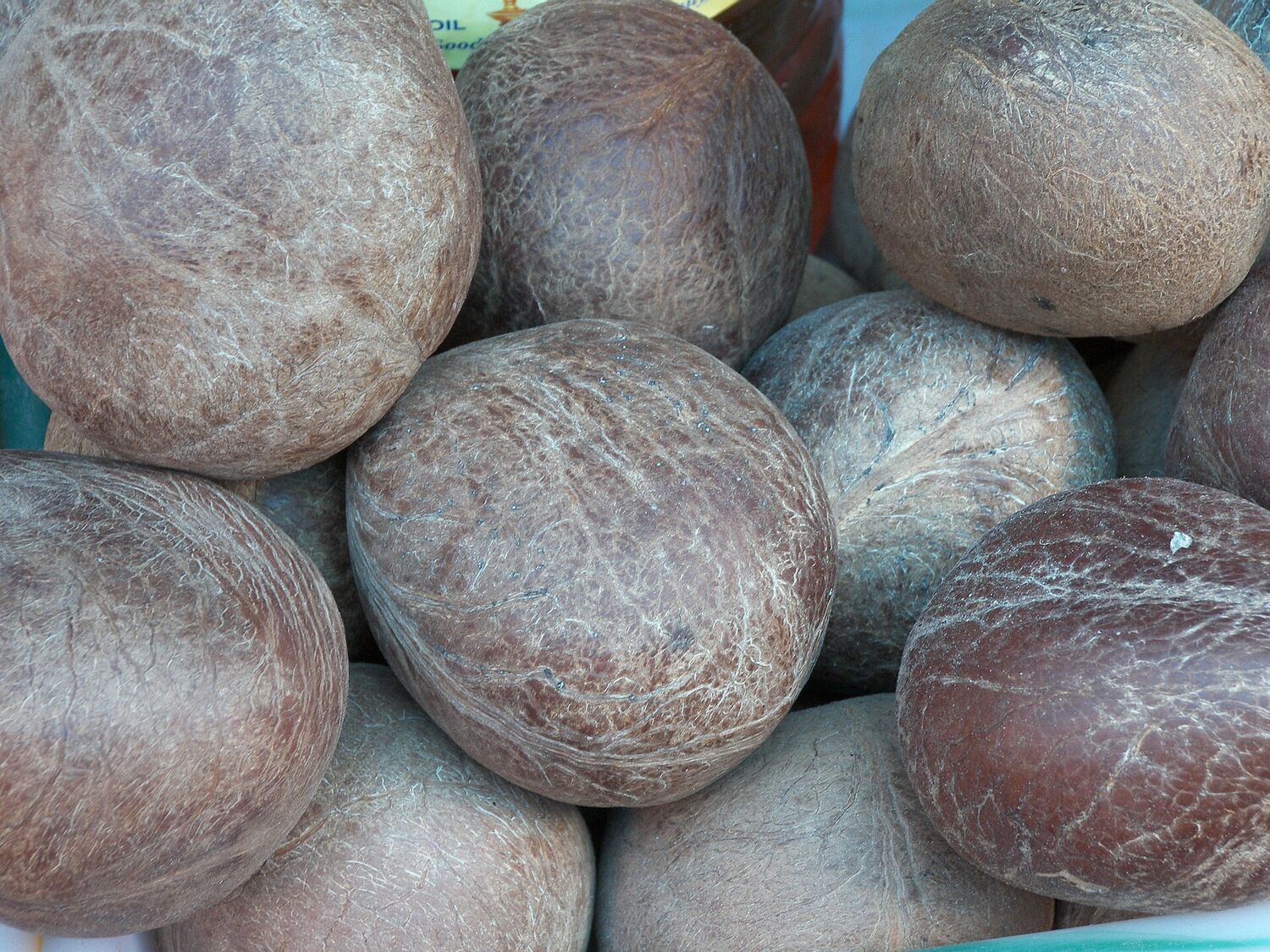 Sun-dried copra, before pressing
Coconut, sesame and groundnut cake
Different seeds leave different cakes, and each suits a slightly different use. Keeping strictly to what is well established:
- Coconut (copra) cake is the residue from pressing dried coconut. It is high in fibre and a useful protein source, broadly in the region of 20–25% protein, which makes it well suited to ruminants: dairy and beef cattle, sheep and goats, whose digestion handles fibre well.
- Groundnut (peanut) cake is a high-protein feed, commonly cited in the broad range of about 40–55% protein. That makes it a valued protein supplement, paired, always, with the dry-storage rule below.
- Sesame (gingelly) cake is high in protein and notably rich in the amino acid methionine, which is useful in balancing a ration that is short of it.
How much of any cake to feed, and to which animals, is a question for your vet or feed adviser, they can help you balance a full ration for the animals you keep. We deliberately do not publish per-animal quantities here, because the right amount depends on the animal, its stage and the rest of its diet.
The one rule that matters: keep it dry
This is why how the cake is dried and stored matters as much as what it is made from. The same care that keeps an oil from turning keeps a cake safe to feed: keep moisture, warmth and time from working against it.
Oil-cake as natural fertiliser
Not all oil-cake goes to animals. It is also a long-established natural fertiliser and manure. Worked into soil or composted, oil-cake releases nutrients gradually as it breaks down, feeding the soil rather than dosing it. Gardeners and growers have used neem cake, groundnut cake and others this way for a long time, a way to return the goodness of the seed to the ground it came from.
If you keep both animals and a kitchen garden, the same sack can serve either purpose; what does not go into a ration can go onto the soil. It is the kind of closed loop our whole approach is built around, you can read more on our sustainability page.
Why it makes pressing near-zero-waste
Step back and the picture is tidy. A farmer grows the seed; we press it for oil; the oil goes to the kitchen and the cake goes back to the farm, as feed for animals or food for the soil. Very little is left over that has no use. That is the quiet logic of a traditional oil press: the oil is the headline, but the cake is what makes the whole thing make sense.
For more on how the press itself works, see our guide on what marachekku (wood-pressed) oil is, or browse our oil-cake (punnakku) directly.
A short FAQ
What is punnakku?
Punnakku is the Tamil word for oil-cake, the firm, solid residue of crushed seed left after the oil has been pressed out. It is used as animal feed and as natural fertiliser.
Which animals is coconut cake suited to?
Coconut (copra) cake, being high in fibre, suits ruminants, dairy and beef cattle, sheep and goats. Your vet or feed adviser can tell you how to fit it into a balanced ration.
Why does groundnut cake need such careful storage?
Because damp groundnut cake can grow moulds that produce aflatoxin, a toxin that is a genuine risk in feed and can pass into milk. Keeping the cake dry, cool and off the ground, and rejecting any musty batch, is what keeps it safe.
Can oil-cake be used in a garden?
Yes. Oil-cake is a long-used natural fertiliser; dug into soil or composted, it releases its nutrients slowly as it breaks down.